
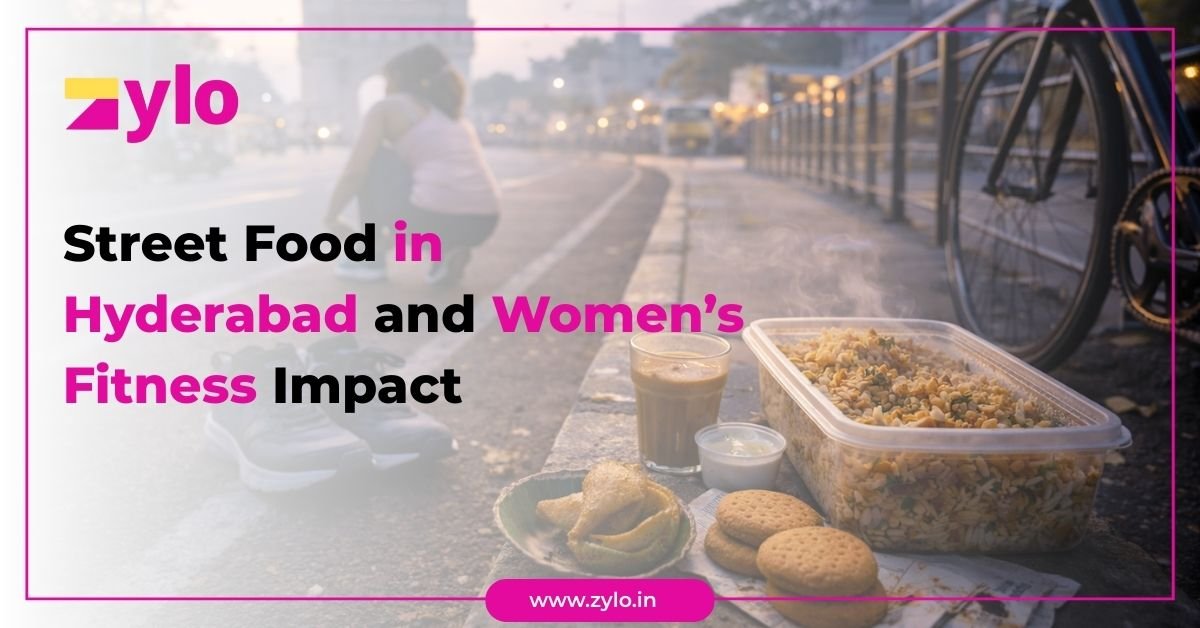
Hyderabad, the City of Nizams, boasts a rich culinary heritage that extends far beyond its famous biryani. The city’s street food culture is vibrant and diverse, offering everything from traditional Irani chai and Osmania biscuits to spicy mirchi bajjis and sweet double ka meetha. For Hyderabad’s women, particularly those balancing careers, family responsibilities, and fitness goals, navigating this tempting street food landscape presents unique challenges that significantly impact their health and fitness journey.

The Hyderabad Street Food Scene
Hyderabad’s street food is deeply woven into the city’s social fabric. Areas like Charminar, Gachibowli, Madhapur, and Banjara Hills are dotted with street vendors offering affordable, flavorful options that attract crowds throughout the day. For working women in Hyderabad’s booming IT sector and other industries, these convenient food options often become dietary staples during hectic workdays.
The variety is impressive: samosas, lukhmi, keema samosas, haleem during Ramadan, dahi puri, pani puri, mirchi bajjis, egg bonda, chicken kebabs, shawarma, and countless other options. While these foods represent Hyderabad’s cultural diversity and culinary excellence, their impact on women’s fitness goals deserves serious examination.
Caloric Density and Weight Management
The primary fitness impact of Hyderabad street food on women stems from its caloric density. Most street food items are high in calories while being low in essential nutrients that women specifically need. A plate of lukhmi (meat-filled pastries) contains approximately 400-500 calories, primarily from refined flour and oil. Mirchi bajjis, though seemingly lighter, pack 300-400 calories from deep-frying in oil.
For women trying to lose weight or maintain a healthy body composition, these caloric loads pose significant challenges. An average woman needs about 1,800-2,000 calories daily for weight maintenance. A street food lunch of lukhmi followed by chai and a sweet can easily account for 800-1,000 calories—half the daily requirement in one meal—without providing adequate nutrition.
The problem intensifies because street food rarely provides satiety proportional to its calorie content. The lack of fiber and protein means women feel hungry again within a few hours, leading to additional snacking and calorie consumption throughout the day. This pattern makes maintaining the calorie deficit necessary for fat loss nearly impossible.
Hormonal Health Implications
Women’s fitness and health are intricately connected to hormonal balance, and Hyderabad street food significantly impacts this delicate system. The high glycemic nature of most street foods—made with refined flour, white rice, and sugar—causes rapid blood glucose spikes followed by crashes. This roller coaster directly affects insulin, the hormone responsible for blood sugar regulation and fat storage.
Chronic consumption of high-glycemic street foods contributes to insulin resistance, a condition where cells become less responsive to insulin. For women, insulin resistance is particularly problematic as it’s a primary factor in polycystic ovary syndrome (PCOS), which affects approximately 10-15% of Indian women of reproductive age. PCOS symptoms include irregular periods, weight gain, difficulty losing weight, acne, and excess facial hair.
Moreover, the inflammatory oils used in street food preparation—often reheated multiple times—increase systemic inflammation. Inflammation interferes with hormones like leptin (which regulates hunger and metabolism) and thyroid hormones (which control metabolic rate). Many women struggling with stubborn weight despite exercise efforts may find that their regular street food consumption is creating hormonal barriers to fitness progress.
Nutritional Deficiencies Affecting Women
Indian women have alarmingly high rates of iron and calcium deficiency—two critical nutrients that Hyderabad street food fails to provide adequately. Iron deficiency leads to anemia, causing fatigue, weakness, reduced exercise capacity, and poor workout recovery. Women lose iron monthly through menstruation, making adequate dietary intake crucial.
While some street foods like keema preparations contain iron, the overall iron content is insufficient for women’s needs, particularly when street food replaces more nutritious home-cooked meals. The heavy tea consumption alongside street food further compounds the problem, as tannins in tea inhibit iron absorption.
Calcium deficiency is equally concerning for women’s fitness and long-term health. Women need adequate calcium for bone density, muscle contraction during exercise, and metabolic function. Most Hyderabad street food provides minimal calcium, and the high sodium content actually increases calcium excretion through urine, potentially accelerating bone density loss—a critical concern for women approaching menopause.
Impact on Exercise Performance and Recovery
For women committed to regular exercise—whether gym workouts, yoga, running, or activities like Online Zumba Classes Hyderabad—Hyderabad street food consumption directly impacts performance and recovery. Exercise breaks down muscle tissue, and proper recovery requires adequate protein, vitamins, and minerals. Street food typically provides insufficient protein relative to its carbohydrate and fat content.
A woman doing strength training needs approximately 1.6–2.0 grams of protein per kilogram of body weight daily. A 60 kg woman requires 96–120 grams of protein per day. Most street food meals provide only 10–15 grams of protein while delivering excessive carbohydrates and fats. This imbalanced macronutrient profile means muscles don’t recover properly, strength gains plateau, and exercise capacity diminishes over time—even when women remain consistent with Online Zumba Classes Hyderabad.
The heavy, oil-laden nature of street food also causes digestive discomfort that interferes with workout quality. Women who consume street food before evening workouts often experience bloating, sluggishness, and reduced performance. The immediate post-workout period is when nutrition matters most for recovery, yet street food’s poor nutritional profile fails to support optimal muscle repair and glycogen replenishment, limiting the results of Online Zumba Classes Hyderabad and other training efforts.
Body Composition Challenges
Women naturally have higher body fat percentages than men due to biological differences. This makes achieving and maintaining lean body composition more challenging. Hyderabad street food works against women’s body composition goals through multiple mechanisms.
The refined carbohydrates and unhealthy fats promote fat storage, particularly around the abdomen and hips—areas where women tend to accumulate fat due to estrogen’s influence. The lack of muscle-building protein means women lose muscle mass over time, which reduces metabolic rate and makes further fat gain easier.
Additionally, the high sodium content in street food causes water retention that masks fat loss progress on the weighing scale. Even when women are successfully losing body fat through exercise and general calorie control, street food-induced water retention can show misleading scale numbers, causing frustration and potentially abandoned fitness efforts.
Energy Levels and Fitness Consistency
Regular exercise is crucial for fitness progress, but Hyderabad street food consumption undermines the energy levels women need for regular workouts. The blood sugar fluctuations from high-glycemic street foods cause energy crashes that leave women feeling too tired for planned exercise sessions.
Moreover, the micronutrient deficiencies from relying on nutritionally poor street food reduce cellular energy production. Women may find themselves perpetually fatigued despite adequate sleep, making consistent gym attendance or home workouts extremely difficult. This creates a vicious cycle: poor diet leads to low energy, which reduces exercise, which impairs fitness progress and metabolism, making weight management even harder.
Mental Health and Emotional Eating
The relationship between Hyderabad street food and women’s fitness extends to mental health. Many women turn to comfort foods during stress, and street food’s palatability—the perfect combination of fat, carbohydrates, and salt—triggers brain reward centers. This can lead to emotional eating patterns that sabotage fitness goals.
The guilt following street food binges, combined with the physical discomfort from overeating oil-heavy foods, creates psychological stress that impacts both mental well-being and future food choices. This emotional burden is particularly heavy for women facing societal pressure about appearance and weight.
Practical Strategies for Balance
Understanding the fitness impact doesn’t require complete street food avoidance. Women can implement strategies like limiting frequency to once weekly, choosing relatively better options like grilled kebabs over fried items, controlling portions by sharing plates, and ensuring other daily meals are nutrient-dense with adequate protein and vegetables.
Conclusion
Street food in Hyderabad significantly impacts women’s fitness through multiple pathways: excessive calories hindering weight management, hormonal disruption from refined carbohydrates, nutritional deficiencies affecting exercise performance, and poor macronutrient profiles impeding body composition goals. For Hyderabad’s women serious about fitness, acknowledging these impacts and developing conscious strategies to navigate the city’s tempting street food culture is essential. Success lies not in complete restriction but in informed moderation, ensuring that occasional indulgences don’t undermine consistent fitness efforts and long-term health goals.